
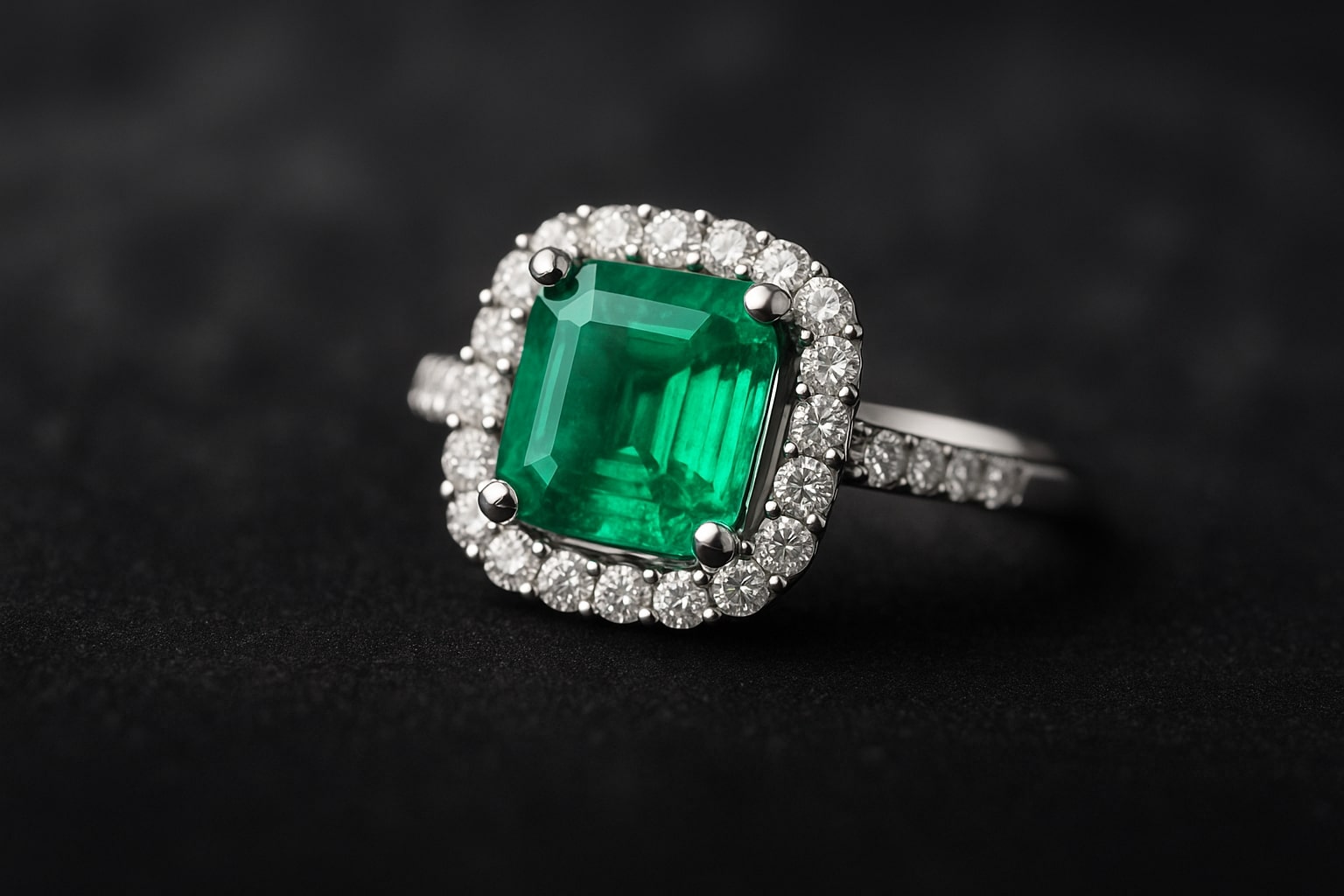
An emerald ring exudes a captivating green brilliance that has enchanted people for centuries. This gemstone ring stands out with its vibrant color and rich history.
From antique royal jewels to modern engagement rings, emeralds carry a sense of magic and meaning. In this guide, we explore everything gemstone buyers should know about emerald rings – from emerald meaning and styles to cuts, metals, costs, and care.
Contents
- 1 Emerald Meaning: Symbolism of the Green Gemstone
- 2 What Is an Emerald? Definition and Origins
- 3 Natural vs. Lab-Created Emeralds: Getting a Real Emerald Ring
- 4 Emerald Cuts and Shapes
- 5 Popular Emerald Ring Styles
- 6 Vintage and Antique Emerald Rings
- 7 Men’s Emerald Rings
- 8 Metals and Settings for Emerald Rings
- 9 Emerald Ring Cost and Buying Guide
- 10 Where to Buy Emerald Rings
- 11 Caring for Your Emerald Ring
- 12 The Timeless Appeal of Emerald Rings
Emerald Meaning: Symbolism of the Green Gemstone
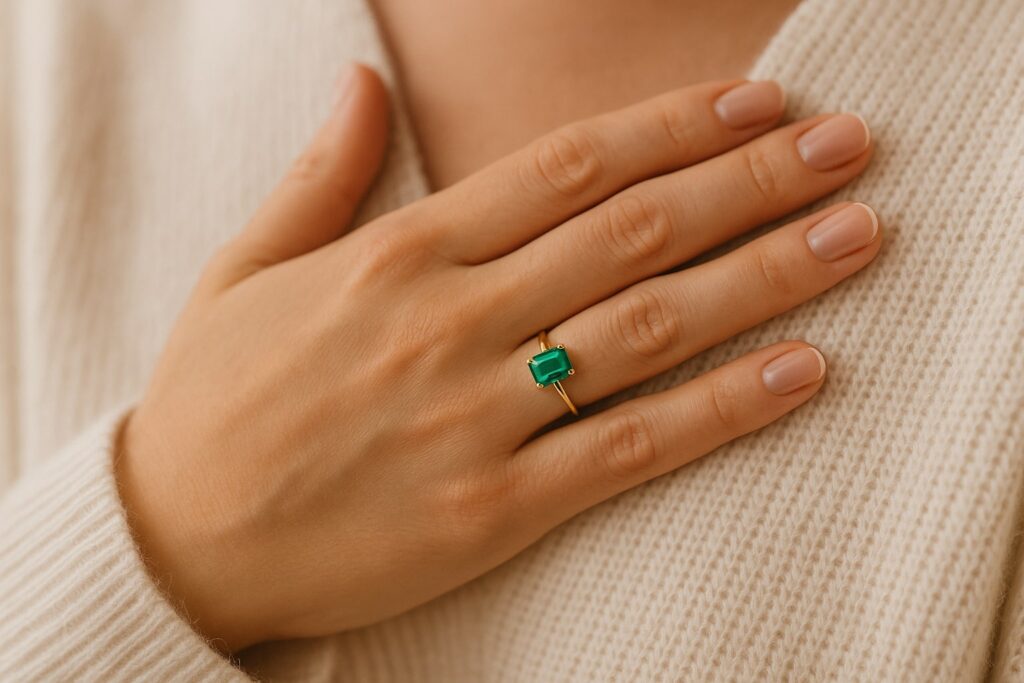
Emeralds have deep symbolic meaning in many cultures. What does an emerald mean to those who wear it? Traditionally, the lush emerald green stone symbolizes new beginnings, abundance, and loyalty in love.
Emerald and Love Symbolism
It has long been revered as a life-affirming gem associated with the heart. In crystal lore, the emerald’s spiritual meaning connects to the heart chakra – it is said to open the heart to give and receive love.
Spiritual and Healing Beliefs
Ancient legends even claimed that emeralds could bestow the gift of eloquence and foresight, revealing truths and allowing one to predict the future.
Cultural and Historical Significance
Today, this May birthstone is seen as a symbol of health, wealth, and personal growth. The color of emerald green itself signifies vitality, spring renewal, and harmony. It’s no wonder that giving an emerald ring is thought to mark important milestones of love and fidelity. In short, the emerald ring meaning combines beauty with profound positive energy and hope for the future.
What Is an Emerald? Definition and Origins
Mineral Composition and Properties
Emerald is defined as the green variety of the mineral beryl. Trace amounts of chromium or vanadium give emerald its signature green color. By definition, if a beryl gem’s color is light or not green enough, it isn’t called emerald – only green gemstones of medium to deep tone qualify as emeralds.
Inclusions and Durability (Jardin Effect)
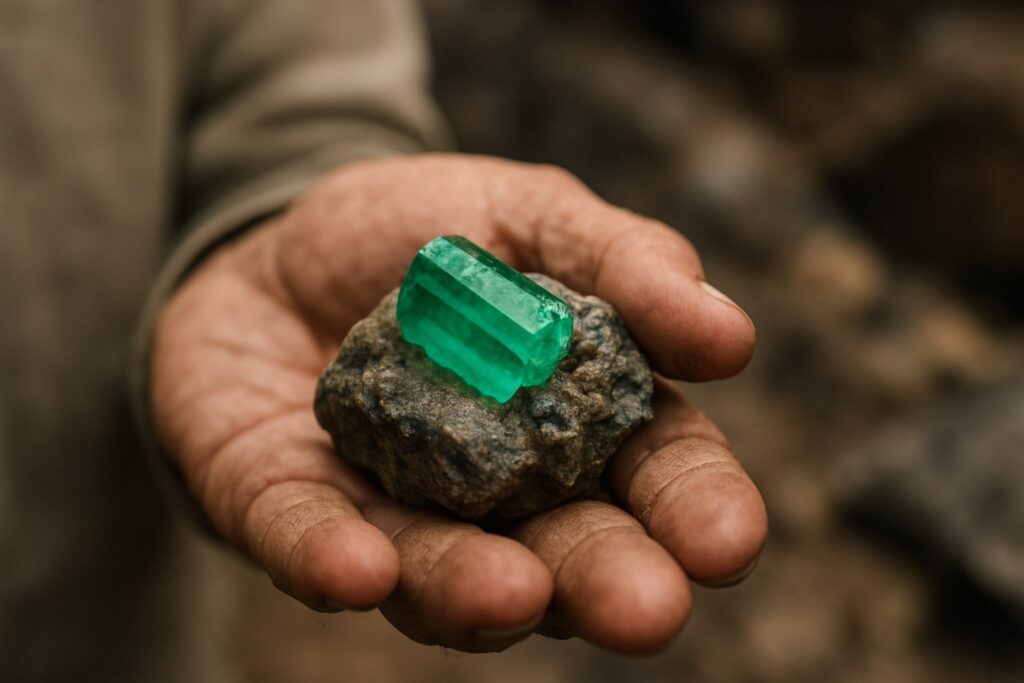
Emeralds are fairly hard (7.5–8 on the Mohs scale) but are not as tough as some other gems, because they almost always contain internal inclusions. In fact, most natural emeralds have numerous inclusions (sometimes called jardin, or “garden,” for their mossy look) which can make them brittle if struck. This means a real emerald ring requires a bit more care in wearing than a diamond ring, but with proper handling it will last for generations.
Emerald Mining Locations
Emeralds have been mined and cherished for thousands of years. The name “emerald” comes from the ancient Greek smaragdos, meaning “green gem”. Early sources of emerald included Egypt (mines in Cleopatra’s time) and ancient India.
Colombian Emeralds
Today, when asked where do emeralds come from, gemologists point to Colombia as the top source. Colombia is famous for producing high-quality emeralds with rich color – it accounts for about 50% of the world’s emerald supply. Colombian emeralds in particular are prized for their pure, vivid green hue.
Zambian and Brazilian Emeralds
Other significant sources of emerald include Zambia (known for slightly bluish-green stones), Brazil, Zimbabwe, and Pakistan, among others.
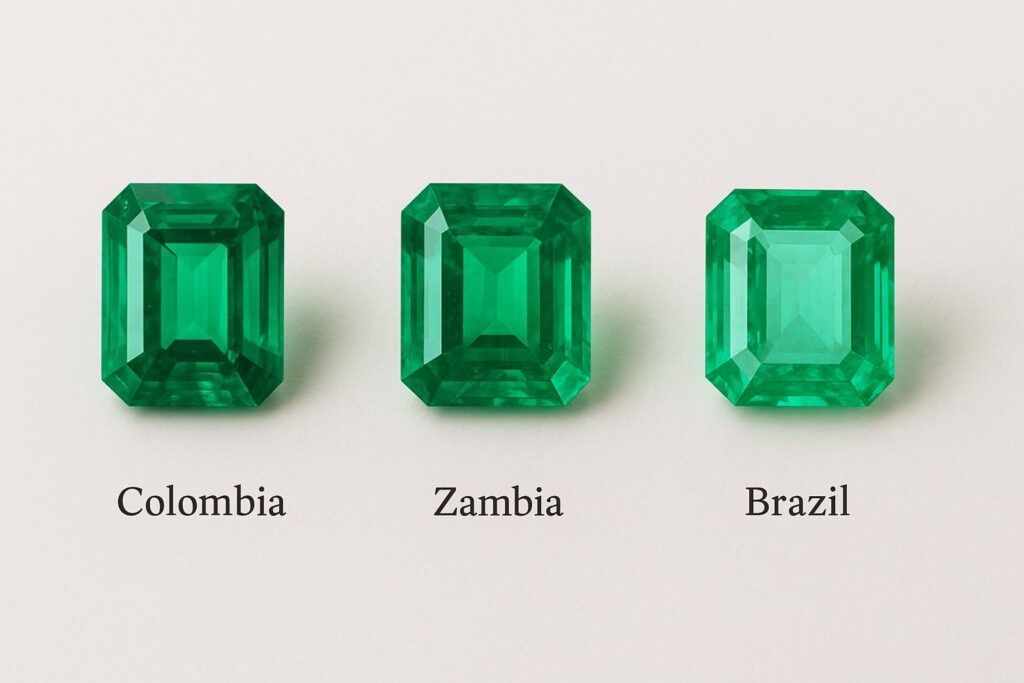
Each origin can impart subtle differences in color and clarity, but the stone’s innate beauty shines in all. For buyers, the origin can affect price – for example, a fine emerald ring (Colombia) might command a premium. No matter the source, a genuine emerald formed in nature over millions of years is a rare treasure.
Natural vs. Lab-Created Emeralds: Getting a Real Emerald Ring
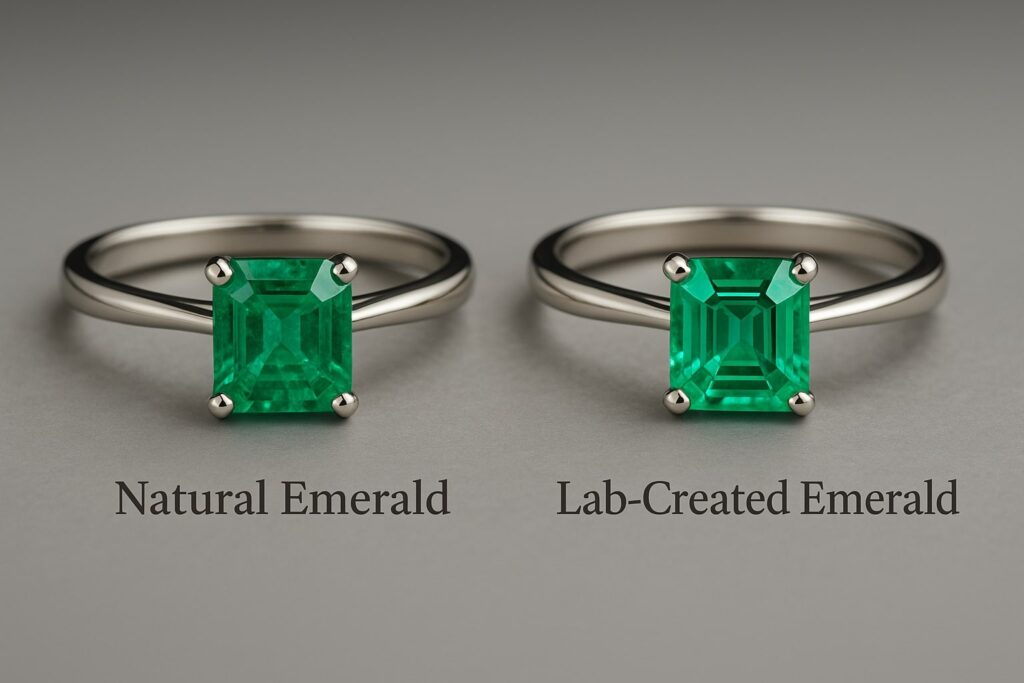
What Are Lab-Created Emeralds?
Not all emeralds on the market come from the earth – some are grown in laboratories. Lab-created emeralds (also called synthetic emeralds) have the same chemical and physical properties as natural emeralds. In other words, a lab-grown emerald is a real emerald gem, only it was formed by technology in a controlled environment instead of underground.
These lab-created stones often have fewer inclusions and a lower price tag than comparable natural stones, making them an attractive option for budget-conscious buyers who want that iconic green look. For example, you might get a larger or cleaner lab emerald ring for the same cost as a smaller natural one.
Advantages of Natural Emeralds
However, many people still love the rarity and romance of a natural emerald. The unique character of each mined stone – with its natural inclusions and one-of-a-kind formation history – can make a genuine emerald ring feel extra special. When shopping, always clarify what type of emerald you are getting.
Natural emerald rings should come with disclosure of any treatments (since about 90% of emeralds are fracture-filled with oil/resin to improve clarity).
Emerald Simulants to Watch Out For
Lab-grown emeralds should be clearly advertised as lab-created, though they may be labeled with terms like “created emerald” or brand names.
Both natural and lab emeralds are considered authentic emeralds in gemology – the main difference lies in origin and often in price and rarity. Be wary of very cheap “emerald” jewelry, as it could be an emerald simulant (imitation) like green cubic zirconia or glass, which does not have emerald’s properties. A reputable seller will always specify if the stone is lab-created or a natural emerald, so you can be confident you’re getting a real emerald ring in either case.
Emerald Cuts and Shapes
Emerald Cut
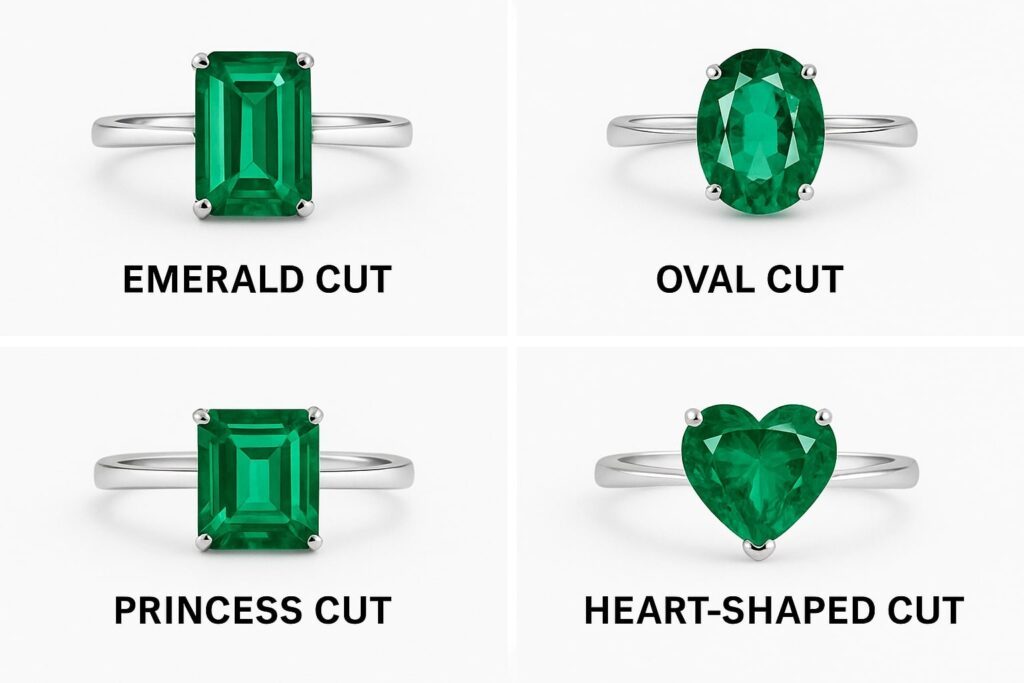
The emerald ring cut and shape of the gemstone dramatically influence its appearance. Emeralds can be fashioned into various shapes to suit different style preferences. Some of the most popular emerald ring shapes include classic cuts as well as creative ones:
This famous cut is named after the gemstone. The emerald cut is a rectangular step cut with long, parallel facets that create a hall-of-mirrors effect. It was originally developed to reduce pressure on natural emerald crystals (which often have inclusions) by cutting off sharp corners.
An emerald-cut stone showcases color over brilliance – perfect for highlighting an emerald’s rich green. Many classic emerald engagement rings feature an emerald-cut center stone for a look of elegant, understated glamour.
Oval Cut
Oval-shaped emeralds have an elongated, rounded outline that maximizes the stone’s face-up size and brilliance. An oval emerald ring offers a blend of classic and modern style. The elongated shape can make the finger look slender, and it reflects light from many angles.
In fact, along with the emerald cut, the oval cut is one of the most common shapes for faceted emeralds. Oval emeralds are a lovely choice for those who want a bit more sparkle and a softer outline.
Princess Cut
The princess cut is a square (or slightly rectangular) shape with numerous faceting similar to a diamond’s brilliant cut. It’s less common in emeralds because it requires very transparent rough, but a princess cut emerald ring has a modern, geometric appeal.
The sharp corners and pyramidal facets of a princess cut give the emerald extra scintillation (sparkle). If you find a high-quality emerald with a princess cut, it can be a striking contemporary piece.
Heart-Shaped Cut
For the romantics, some emeralds are cut into the shape of a heart. A heart emerald ring is quite rare and usually custom-made. The cutter must skillfully form the cleft and round lobes of the heart without breaking the stone.
When executed well, a heart-shaped emerald is a unique symbol of love. It’s a perfect choice for an anniversary gift or even a non-traditional engagement ring for someone who loves distinctive jewelry.
Other Shapes (Round, Cushion, Cabochon)
Of course, emeralds can also be found in other shapes like round, pear, or cushion, though these are less frequently used due to the nature of emerald crystals and rough. Cabochon (smooth, domed) emeralds are also seen, especially in vintage or men’s rings, highlighting the stone’s color without facets.
The cut you choose will affect the ring’s style and how the emerald catches the light. No matter the shape, ensure the cut is done well – emeralds need precise cutting to bring out their color and minimize vulnerabilities at the corners or points.
Popular Emerald Ring Styles
Emeralds are versatile and stunning in a variety of ring designs. From engagement rings to fashion statements, here are some popular emerald ring styles that showcase this gem:
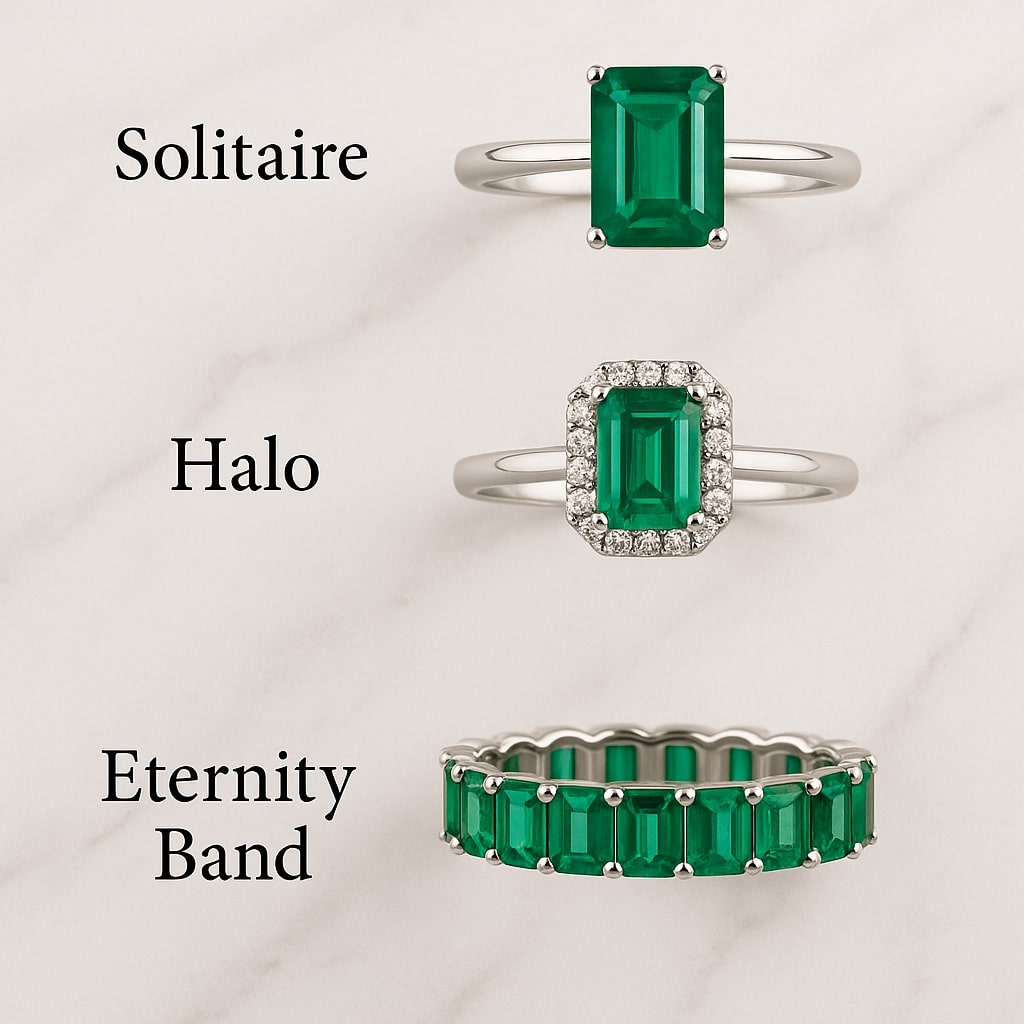
Emerald Solitaire Ring
A solitaire emerald ring features a single emerald as the center of attention. Typically set with prongs on a simple band, this classic style lets the gemstone’s beauty speak for itself.
A solitaire emerald ring makes a powerful statement with its simplicity and is a popular choice for engagements or those who want an elegant, minimalist look focused on the stone.
Emerald and Diamond Halo Ring
Many people love pairing emeralds with diamonds for extra sparkle. An emerald halo ring has a center emerald encircled by a “halo” of small diamonds. The diamond halo amplifies the green gem’s brilliance and also protects it like a buffer.
In an emerald ring with diamond accents, the contrast between the lush green and the bright white diamonds is truly eye-catching. This glamorous style is common in modern emerald engagement rings, as the halo makes the center stone appear larger and adds a vintage-meets-modern flair.
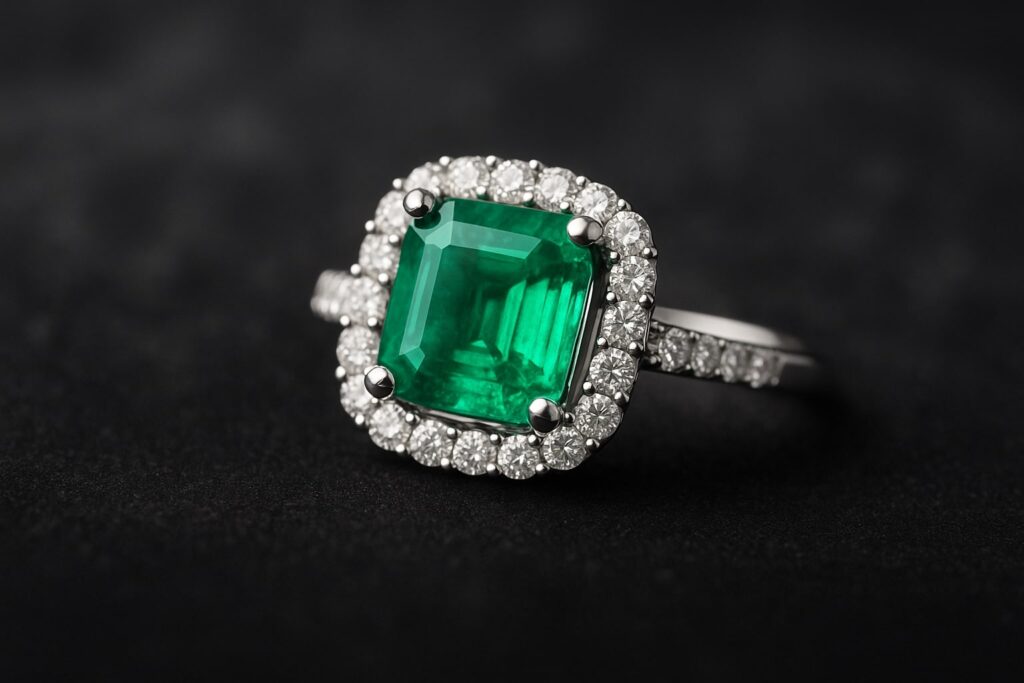
Three-Stone Emerald Ring
This design features an emerald center stone flanked by two side stones. In an emerald ring 3 stone style, the side stones are often diamonds or sometimes other gemstones or smaller emeralds.
The three stones are said to represent the past, present, and future of a relationship, making this ring meaningful for engagements or anniversaries.
Diamond side stones are a popular choice – they accentuate the emerald’s color while adding brilliance. A three-stone emerald-and-diamond ring offers a balanced, luxurious look with plenty of sparkle.
Emerald Eternity Band
An eternity ring has gemstones set all around the band in a continuous line. An emerald eternity ring features emeralds (occasionally alternating with diamonds) encircling the finger. The result is a dazzling line of green that symbolizes eternal love – since there’s no beginning or end to the circle of stones.
Emerald eternity bands can be worn as wedding rings, anniversary rings, or stackable rings. They are usually set in gold or platinum with a secure setting style (like channel or shared prong) to protect the many emeralds. The effect is luxurious and meaningful, especially for someone who wants a unique twist on a wedding band.
Emerald Cocktail Ring
A cocktail ring is a bold, oversized ring typically worn on the right hand for parties or events. Emeralds have been a favorite choice for cocktail rings due to their vibrant color. An emerald cocktail ring might showcase a large emerald or a cluster of emeralds in an elaborate design.
Often, these rings are vintage or vintage-inspired – for example, an emerald set with multiple diamonds around it, or an abstract gold design with emerald accents. The goal is to make a statement. Large emerald rings (3 carats, 5 carats, or more) often fall into this category.
They can be breathtaking conversation pieces. If you love dramatic jewelry, an emerald cocktail ring delivers with its size and rich green impact.
These are just a few popular styles. You can also find unique designer creations, such as emerald rings with baguette diamond side stones or emerald art deco rings featuring geometric patterns. Whatever the style, the emerald’s color tends to steal the spotlight and give the ring a regal touch.
Vintage and Antique Emerald Rings
Victorian and Edwardian Emerald Rings
Emeralds have been used in jewelry for centuries, so it’s no surprise that many stunning antique rings feature emeralds. Vintage emerald rings (whether true antiques or vintage-inspired) offer a sense of history and character.
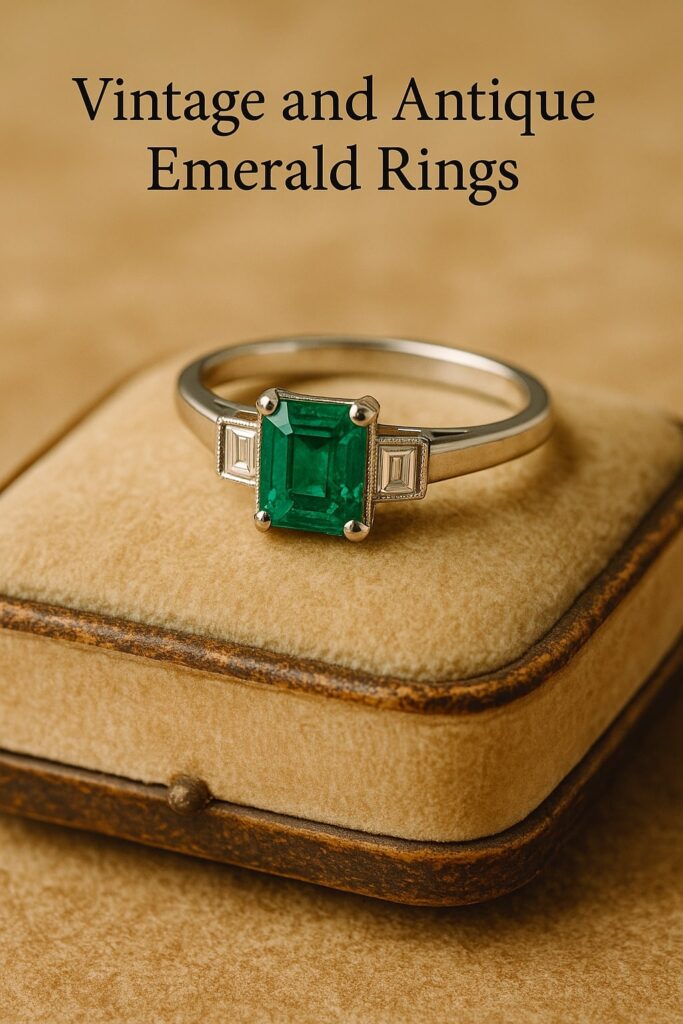
These rings often showcase craftsmanship and design details from bygone eras. For example, an emerald ring antique from the Victorian or Edwardian period might have an ornate gold setting with filigree or old mine-cut diamonds alongside the emerald.
Art Deco Emerald Rings
One particularly popular era for emerald jewelry was the Art Deco period of the 1920s-1930s. Art Deco emerald rings typically have bold geometric designs and often pair emeralds with diamonds or platinum settings. An example is an emerald set in a yellow gold or platinum band, flanked by tapered baguette diamonds on each side – a classic Art Deco style.
Those baguette-cut diamonds accent the emerald with clean lines and a vintage flair. The contrast of the green stone with the white metal and diamonds creates a glamorous look straight out of a Great Gatsby scene.
Tips for Buying Antique Emerald Jewelry
Choosing a vintage or antique emerald ring means you’re getting a piece of jewelry with a story. The emerald in an older ring may have a softer, time-worn glow or unique old-style cut. Antique rings are often made with high-quality natural emeralds from traditional sources like Colombia, since those were historically coveted.
Keep in mind that if you buy a true antique emerald ring, it’s wise to have the setting and stone checked by a jeweler to ensure the prongs are secure (older rings sometimes need a bit of restoration to be worn daily). Owning an antique emerald ring is like having a tiny piece of history on your finger – it’s a wonderful choice for someone who appreciates vintage style and timeless elegance.
Men’s Emerald Rings
Popular Designs for Men
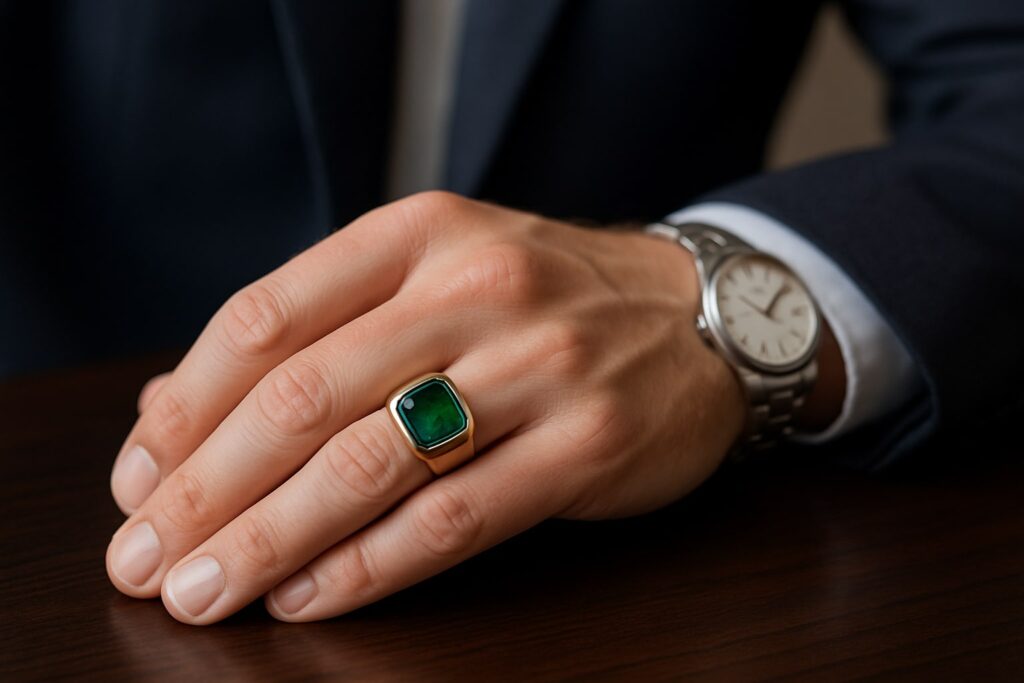
Emerald rings aren’t just for women – men have worn emeralds in rings for ages, from ancient kings to modern gentlemen. A well-crafted emerald ring for men makes a bold and unique statement. Men’s emerald rings typically feature substantial, confident designs. For example, a classic men’s style is a gold signet ring with an emerald set on top.
The emerald might be cut en cabochon (a smooth dome) or faceted, and the ring often has a broad, masculine band. Gold emerald rings are popular for men, especially in yellow gold which gives a warm, rich backdrop to the green stone. White gold or sterling silver are also used, offering a cooler tone that still highlights the emerald’s color.
Symbolism and Birthstone Significance
Common designs for men include: rectangular or oval emeralds set in heavy gold rings (sometimes with subtle side detail or small diamonds), Celtic-style bands with emerald accents, or even pinky rings featuring emeralds.
Because emerald is the birthstone for May, some men wear an emerald ring as a birthstone ring or class ring. An emerald ring men can symbolize success, status, or personal meaning – for instance, emerald is thought to bring clarity of mind and foresight, qualities anyone might wish to channel.
Durability and Best Settings for Men’s Rings
When choosing a men’s emerald ring, durability is key: a bezel or flush setting can protect the gem, and a sturdy band will hold up to daily wear. With the right design, an emerald ring on a man’s hand looks distinguished and adds a pop of color that stands out in a crowd.
Metals and Settings for Emerald Rings
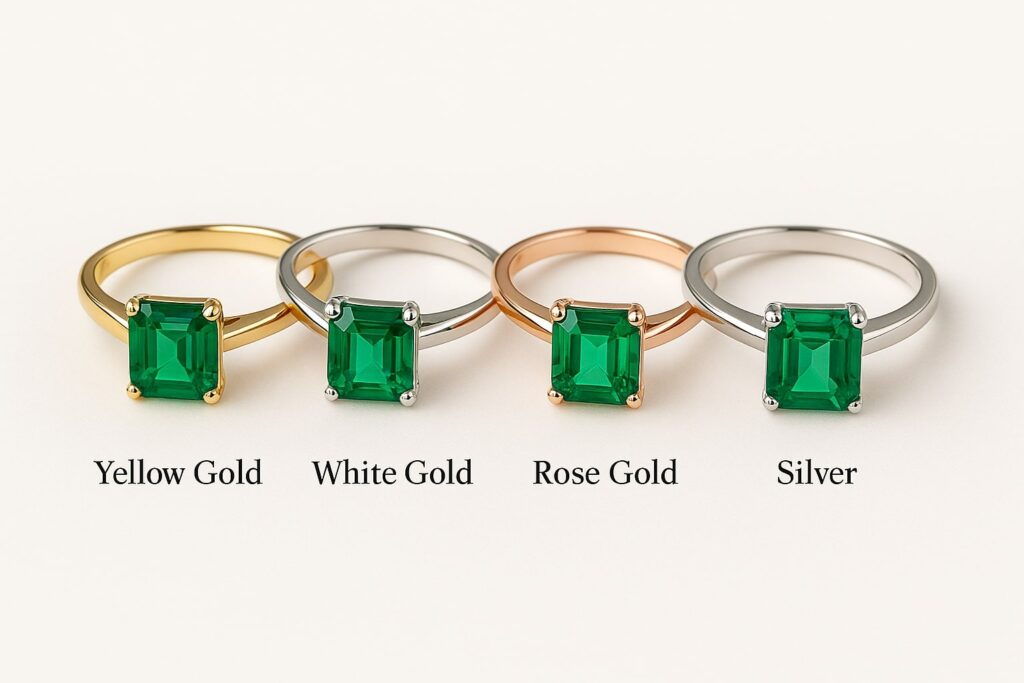
The metal of a ring influences both the look and the durability of an emerald ring. Emeralds pair beautifully with a variety of metals, each giving a different style:
Yellow Gold Settings
An emerald ring in gold (yellow gold) is a classic combination. The rich yellow tone of gold complements the green of emerald, creating a warm, regal look. Many vintage and antique emerald rings are in yellow gold. A yellow gold band also tends to make the green color appear even more vibrant. If you love a classic or antique aesthetic, an emerald ring in 14k or 18k yellow gold is a wonderful choice.
White Gold and Platinum Settings
White gold emerald rings have a modern, elegant appeal. Pale metals (which include white gold and platinum) provide a neutral, silvery backdrop that makes a green emerald pop. For example, an emerald ring with a white gold band offers a sleek contrast that highlights the stone’s color vividly. Platinum is a premium white metal often used in high-end rings – it’s very durable and naturally hypoallergenic.
Many contemporary emerald engagement rings are made in white gold or platinum, sometimes with diamond halos or side stones. These white metals are excellent for secure settings (prongs or bezels) and they won’t tarnish over time. If you want a crisp, modern look, an emerald set in white gold or platinum is ideal.
Rose Gold Settings
Rose gold has a pinkish hue due to its copper content and gives an emerald ring a romantic, vintage-inspired feel. The combination of an emerald with rose gold is less common, which makes it quite distinctive.
The soft warmth of rose gold can accentuate the depth of an emerald’s green in a charming way. This metal is popular in retro-style or bespoke designs. An emerald ring rose gold setting might appeal if you want something unconventional yet elegant.
Silver Settings
Silver (especially sterling silver, which is 92.5% pure silver) is another metal option for emerald rings. Silver’s grayish-white shine is similar to white gold, though silver is more affordable. You’ll often find emerald rings in silver in fashion jewelry or men’s rings.
Silver is relatively soft and can tarnish over time, so it may require occasional polishing and a bit of care. Still, a sterling emerald ring can be a budget-friendly way to get the white-metal look with a genuine emerald. Just be sure to store silver jewelry properly to minimize tarnish (in a dry, airtight container when not worn).
Best Settings for Protection
When it comes to settings, emeralds benefit from protective mounting because of their inclusions. A common prong setting (with usually four or six prongs) is great for showing off an emerald, but it should be well-crafted to hold the stone securely at its corners.
Emerald-cut stones, for example, have clipped corners which prongs can grasp. A popular protective setting is the bezel setting, where a rim of metal surrounds the emerald’s perimeter. A bezel-set emerald ring offers excellent security – the metal encircling the stone helps shield it from knocks or chips. This can be especially important since emeralds can be brittle if struck.
The bezel also gives a sleek, modern look, and is often used in men’s rings or rings for active wearers. The trade-off is that a bezel can slightly reduce the visible size of the stone compared to prongs, but many find the safety and style worth it.
Other setting styles include halo settings (discussed earlier, with diamonds around the emerald) and channel settings (often used for emerald eternity bands, where stones sit flush in a groove in the metal). Each setting type can affect the overall appearance and how much light the emerald receives. When choosing a setting, consider your lifestyle: if you plan to wear the ring every day, a lower-profile or bezel setting might be wise. If the ring is for special occasions, a more delicate prong setting could be fine.
Clarifying the Term “White Emerald”
A note on “white emerald”: Occasionally people use the term “white emerald ring,” but technically there is no such thing as a white emerald – emeralds by definition are green beryl. A “white emerald” might refer to an emerald-cut white stone (like a diamond) or simply an emerald ring set in white metal.
Always remember that a true emerald will be green. So if you see “white emerald” advertised, ask for clarification (it could be a misnomer or an imitation stone). In legitimate terms, emerald = green gem.
Emerald Ring Cost and Buying Guide
Factors That Influence Price
How much does an emerald ring cost? The price of an emerald ring can vary enormously based on the quality of the emerald, its size, and the ring’s materials. Emeralds are one of the “big four” precious gemstones (along with diamond, ruby, sapphire), so top-quality stones can be very expensive.
Emerald Quality – Color, Clarity, Carat
When evaluating an emerald, gem experts prioritize color and clarity above all. In fact, color is usually the most important factor in emerald value, with clarity a close second. A truly fine emerald will have a pure, intense green hue and relatively good transparency (not too many obvious inclusions). Such a gem is quite rare and priced accordingly.
Carat weight also affects price: large emeralds are much rarer than small ones. However, unlike diamonds, emerald pricing doesn’t jump at exact weight milestones in the same way – it’s more about the overall quality. A high-quality 1-carat emerald might easily cost more than a mediocre 2-carat emerald if the smaller stone has much better color and clarity.
For example, a deeply saturated, eye-clean 2 carat Colombian emerald could cost far more than a 5 carat emerald that is pale or heavily included. Each stone is unique, so it’s important to judge the gem itself, not just the numbers. Emerald ring cost will also include the setting metal and any side diamonds; a platinum ring with diamonds will cost more than a silver solitaire setting, of course.
Examples of Price Ranges
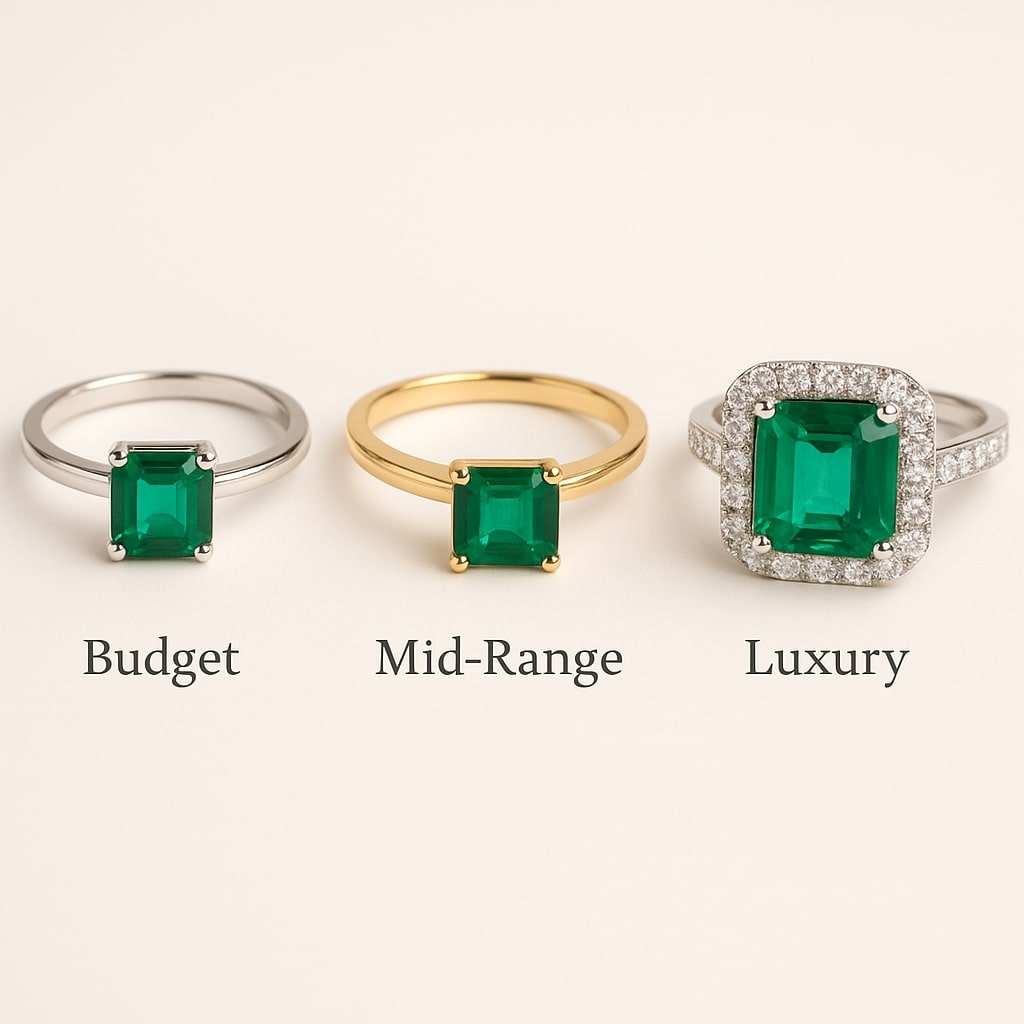
To give a rough idea: you might find a small emerald ring for sale in sterling silver for a few hundred dollars, especially if the emerald is modest in quality or lab-created. In contrast, a fine natural emerald (vivid green, minimal inclusions) of a few carats set in gold could run into the thousands or even tens of thousands of dollars.
Truly exceptional emerald rings – say, a 5 carat top-quality natural emerald with diamond accents in platinum – can easily cost five figures or more. Large emerald rings of high quality are exceedingly rare and collectable. Keep in mind that most natural emeralds on the market are treated (oiled) to improve their appearance, and this is generally reflected in the pricing (untreated emeralds with great clarity are extremely rare and expensive).
Always ask the jeweler for disclosure of treatments; reputable sellers will provide a certificate or report for significant emeralds, noting any enhancements.
If you are on a tighter budget or want the best bang for your buck, consider lab-created emerald rings. Lab emeralds can give you that gorgeous green color and clarity at a fraction of the price of a comparable natural stone.
They are real emeralds, just grown in a lab, and often you can get a larger or cleaner stone for the same budget. Another budget-friendly option is choosing an emerald with a slightly different hue or more inclusions – some people actually love the character of emeralds that show their jardin (garden of inclusions) because it makes each stone unique.
When shopping, take note of the return policy and any certifications. For a significant purchase, it may be wise to get a gemstone report from a lab (like GIA or IGI) especially if the emerald is advertised as high-end, Colombian, or untreated. Such reports can confirm if the stone is natural and detail any treatments. Emerald ring for sale listings online should ideally mention if the emerald is natural or lab-made, its carat weight, and the metal quality of the ring.
Where to Buy Emerald Rings
Luxury Jewelers
You can find emerald rings at many jewelers, but it’s important to go to a trusted source. Luxury brands like Tiffany & Co. and Cartier are known for their exquisite emerald rings and high jewelry pieces – their emerald offerings often feature exceptional gemstones (with prices to match the quality and brand prestige).
Retail Jewelers
On the other end, popular retail jewelers such as Kay Jewelers or department stores like Macy’s carry a range of emerald rings, often in more affordable 10k or 14k gold settings with smaller emeralds or even lab-created stones. These can be great for fashion jewelry or entry-level fine jewelry. Even brands like Pandora offer jewelry with emerald-colored stones (sometimes these may be lab-created emeralds or crystal simulants) as accessible birthstone pieces.
Designer brands like Effy specialize in colored gemstones and often have bold emerald ring collections – for instance, Effy’s designs might include emerald and diamond cocktail rings or vintage-inspired settings sold through various jewelers.
No matter where you shop, do a bit of homework: check if the emerald is natural or lab, ask about the stone’s origin (if known) and treatment, and ensure the retailer has good reviews or a certification for the gem.
Compare the color of the emerald in different lights if possible – a superior emerald will look vividly green even in dim lighting (though almost all emeralds will show their best color in daylight or under jewelry lights). By being informed, you’ll be able to choose an emerald ring that is both beautiful and a good value for your budget.
Caring for Your Emerald Ring
Emeralds may be precious, but with proper care you can wear and enjoy your emerald ring regularly. Because most emeralds contain inclusions and many are fracture-filled, they require somewhat gentler care than a diamond would. Here are essential tips on how to clean an emerald ring and protect it so it stays glowing for generations:
Safe Cleaning Methods
The safest way to clean emerald jewelry is by hand. Use warm (not hot) water with a mild dish soap. Gently scrub the ring with a soft toothbrush or a jewelry brush to remove dirt behind the stone. Do not use harsh cleaners or chemicals, and avoid excessive soaking.
After a brief soak and gentle cleaning, rinse with lukewarm water and pat the ring dry with a soft, lint-free cloth. This simple method will keep your emerald ring shining without risking damage.

Avoid Ultrasonic and Steam Cleaners
Never clean an emerald ring in an ultrasonic jewelry cleaner or with steam. Ultrasonic machines send vibrations that can worsen cracks or knock an included stone, and steam can cause the oils/resins in treated emeralds to sweat out. Professional jewelers know to avoid these methods for emeralds. Stick to the gentle soap-and-water approach at home.
Be Careful with Heat and Chemicals
Emeralds can be sensitive to extreme heat or sudden temperature changes. Don’t expose your emerald ring to boiling water, open flames, or harsh chemicals (like acetone, alcohol, or household cleaners). Heat can expand fractures and cause clarity treatment oils to leak out, and chemicals can strip oils or damage the stone’s surface.
It’s best to remove your emerald ring if you’re using cleaning agents, solvents, or hand sanitizer with high alcohol content frequently. Also, avoid wearing it in hot tubs or saunas.
Tips for Daily Wear and Storage
Emerald rings can certainly be worn daily (many people wear emerald engagement rings), but you should take some precautions. It’s wise to take off your ring before heavy physical activities, sports, lifting weights, gardening, or doing housework like dishwashing or using tools. This prevents accidental knocks or exposure to abrasives.
When you’re not wearing the ring, store it separately from other jewelry, preferably in a soft pouch or lined jewelry box. Remember, diamonds and sapphires can scratch an emerald if they rub against it, so don’t toss your emerald ring in a drawer with other hard gems unprotected. Storing pieces individually keeps them all safe.
Checking and Maintaining the Setting
Over time, ring prongs or bezels can loosen slightly with regular wear. It’s important to occasionally inspect your emerald ring (or have a jeweler inspect it) to ensure the stone is secure in its setting. A loose stone could potentially fall out.
Prongs can be retightened by a jeweler if needed – it’s a quick fix that will save you from the heartbreak of losing your emerald. Some jewelers recommend a check-up every year or two, especially for frequently worn rings like wedding or engagement rings.
With these care tips, your emerald ring will remain as enchanting as ever. Emeralds might require a bit more mindfulness in maintenance, but their beauty is well worth it. In fact, many real emerald rings from decades or centuries ago are still around today, passed down as heirlooms, because their owners took care of them. Your emerald ring, too, can become a cherished heirloom if you treat it with a little TLC.
The Timeless Appeal of Emerald Rings
An emerald ring offers a unique blend of natural beauty, rarity, and meaningful symbolism. Whether you’re drawn to a vintage emerald ring with Old World charm or a sleek modern design in white gold, an emerald ring always makes a statement. Its vibrant green allure sets it apart from more common gems. For gemstone buyers, an emerald ring can be a rewarding investment in something truly special – a piece of jewelry that carries history, conveys emotion, and showcases exquisite color.
With the right knowledge about emerald quality, proper care, and thoughtful selection, you can find an emerald ring that will bring joy and elegance for a lifetime. Wearing an emerald ring is like wearing a little piece of magic on your finger – a reminder of nature’s wonder and the enduring elegance of emerald green.
Source: Wikipedia